
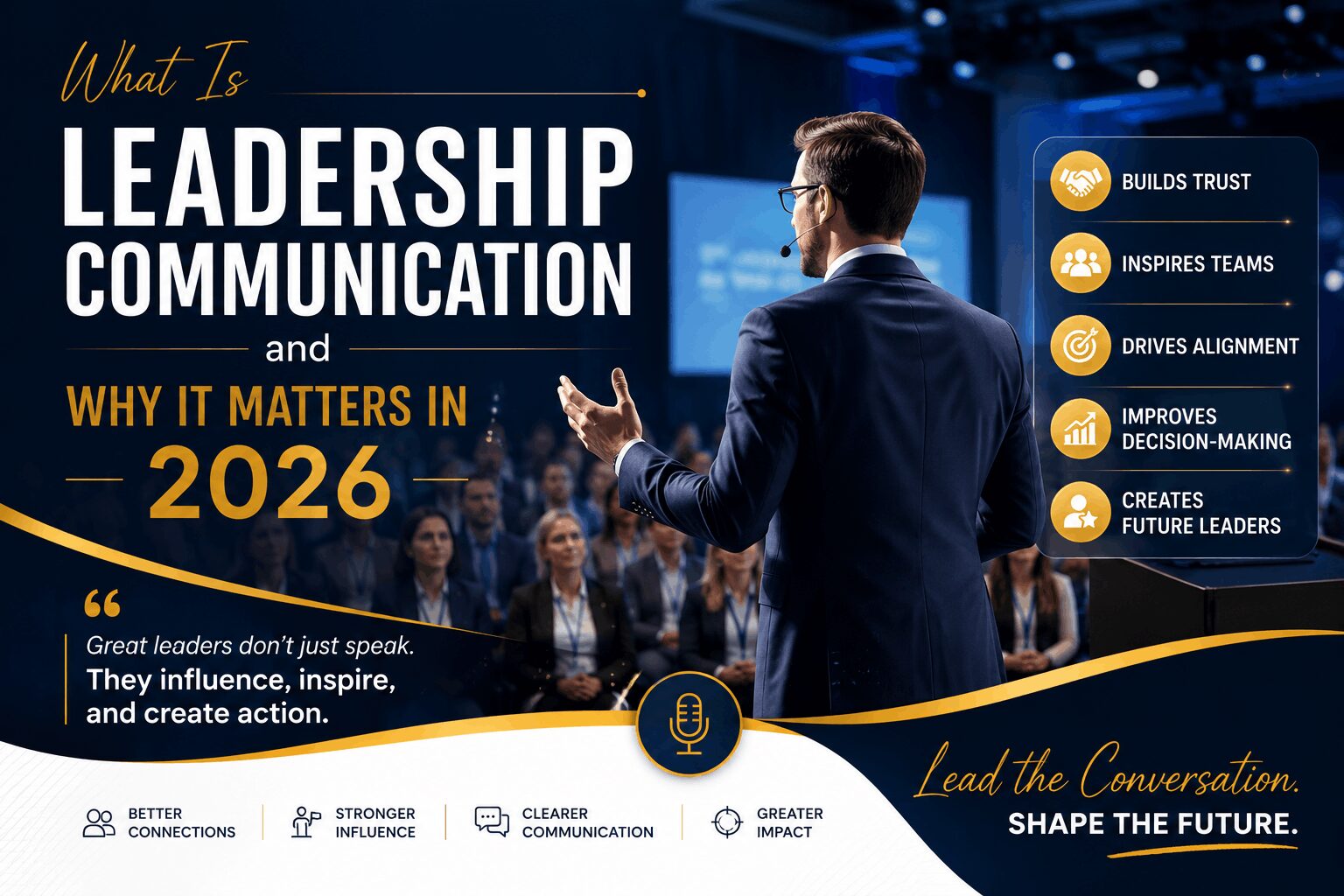
What Is Leadership Communication?
Leadership communication is the ability of leaders to effectively share ideas, inspire action, build trust, and guide teams toward common goals. It goes beyond simply delivering information it involves creating clarity, influencing decisions, and fostering meaningful connections through authentic and impactful communication.
In 2026, leadership communication has become one of the most valuable skills for executives, entrepreneurs, managers, and changemakers who want to lead with confidence in an increasingly digital and fast-changing world.
Why Is Leadership Communication Important?
Leadership communication is important because it directly influences employee engagement, organizational culture, decision-making, and business success. Strong communicators can align teams, inspire trust, and navigate challenges more effectively.
As workplaces become more hybrid, global, and technology-driven, leaders must communicate with clarity, empathy, and purpose. Effective leadership communication helps organizations remain adaptable, innovative, and connected in an era where attention and trust are increasingly difficult to earn.
Read More: Key Factors to Consider Before Hiring a Motivational Speaker in India
Understanding Leadership Communication in 2026
The role of leadership communication has evolved significantly over the past few years. Modern leaders are expected to do more than manage tasks and processes. They must communicate vision, motivate teams, handle uncertainty, and create a sense of belonging.
Today’s audiences whether employees, customers, investors, or communities expect transparency, authenticity, and meaningful engagement. Leaders who can communicate effectively are more likely to inspire confidence, strengthen relationships, and drive positive change.
At The Power Speak, storytelling-driven communication is at the heart of impactful leadership. Through real stories, authentic experiences, and meaningful conversations, leaders can create stronger emotional connections and leave lasting impressions on their audiences.
Benefits of Leadership Communication
1. Builds Trust and Credibility
Clear and honest communication helps leaders establish trust with employees, stakeholders, and customers.
2. Improves Team Alignment
When leaders communicate expectations and goals effectively, teams work together more efficiently toward shared objectives.
3. Enhances Employee Engagement
Employees who understand the organization’s vision and direction are more motivated and committed to their work.
4. Strengthens Decision-Making
Effective communication ensures that important information is shared clearly, leading to better and faster decisions.
5. Supports Change Management
Organizations constantly evolve. Strong leadership communication helps teams adapt to change with confidence and clarity.
6. Increases Influence and Impact
Leaders who communicate persuasively can inspire action, gain support, and drive meaningful transformation.
7. Creates a Positive Workplace Culture
Open and transparent communication fosters collaboration, respect, and accountability throughout the organization.
Best Practices for Leadership Communication
Communicate with Clarity
Use simple, direct language that eliminates confusion and ensures your message is easily understood.
Listen Actively
Great communication starts with listening. Encourage feedback and demonstrate genuine interest in different perspectives.
Use Storytelling
Stories make messages memorable and relatable. Leaders who share authentic experiences often create stronger emotional connections.
Be Authentic
People trust leaders who communicate honestly and consistently. Authenticity builds long-term credibility.
Adapt to Your Audience
Different audiences require different communication approaches. Tailor your message based on their needs and expectations.
Encourage Two-Way Communication
Create opportunities for dialogue rather than relying solely on one-way communication.
Maintain Consistency
Consistent messaging helps reinforce trust and prevents misunderstandings.
Embrace Digital Communication Skills
Leaders must be effective across virtual meetings, social platforms, webinars, and digital collaboration tools.
Common Mistakes in Leadership Communication
Lack of Clarity
Unclear messages often lead to confusion, misalignment, and reduced productivity.
Ignoring Feedback
Leaders who fail to listen may miss valuable insights and opportunities for improvement.
Overloading Information
Providing too much information at once can overwhelm audiences and reduce message retention.
Inconsistent Messaging
Contradictory communication can damage trust and create uncertainty within teams.
Focusing Only on Facts
Facts are important, but emotional connection and storytelling often drive engagement and action.
Poor Active Listening
Communication is not only about speaking it is equally about understanding others.
Avoiding Difficult Conversations
Strong leaders address challenges openly rather than postponing important discussions.
The Future of Leadership Communication
As artificial intelligence, remote work, and digital transformation continue reshaping industries, leadership communication will become even more critical. Future leaders will need to balance technology with human connection, combining data-driven insights with empathy, authenticity, and storytelling.
Organizations that invest in communication development will be better positioned to attract talent, build trust, and create sustainable growth. Leadership communication will remain a defining factor in organizational success throughout 2026 and beyond.
FAQs
What is leadership communication?
Leadership communication is the process of sharing information, vision, and ideas in a way that inspires, guides, and influences others.
Why is leadership communication important in 2026?
It helps leaders build trust, engage teams, manage change, and navigate increasingly complex business environments.
What are the key components of leadership communication?
Clarity, active listening, authenticity, empathy, storytelling, and consistency are essential components.
How does leadership communication impact employee engagement?
Clear communication helps employees understand goals, feel valued, and stay connected to organizational objectives.
Can leadership communication be improved?
Yes. Through training, practice, feedback, and continuous learning, leaders can significantly enhance their communication skills.
What role does storytelling play in leadership communication?
Storytelling helps leaders make messages more engaging, memorable, and emotionally impactful.
How does leadership communication support organizational success?
It improves collaboration, strengthens culture, increases productivity, and helps organizations achieve strategic goals.
Why is leadership communication important for business leaders?
Business leaders who communicate effectively can inspire teams, influence stakeholders, and drive meaningful transformation.
Conclusion
Leadership communication is no longer a soft skill it is a strategic advantage. In 2026, leaders who communicate with clarity, authenticity, and purpose will be better equipped to build trust, inspire action, and navigate change. Whether leading a business, a team, or a movement, effective communication remains the foundation of meaningful leadership.
At The Power Speak, we believe powerful communication begins with authentic storytelling. By helping leaders, changemakers, and professionals share real stories that inspire audiences, meaningful transformation becomes possible. As the future of leadership continues to evolve, those who master leadership communication will be the ones who create lasting impact and influence.