
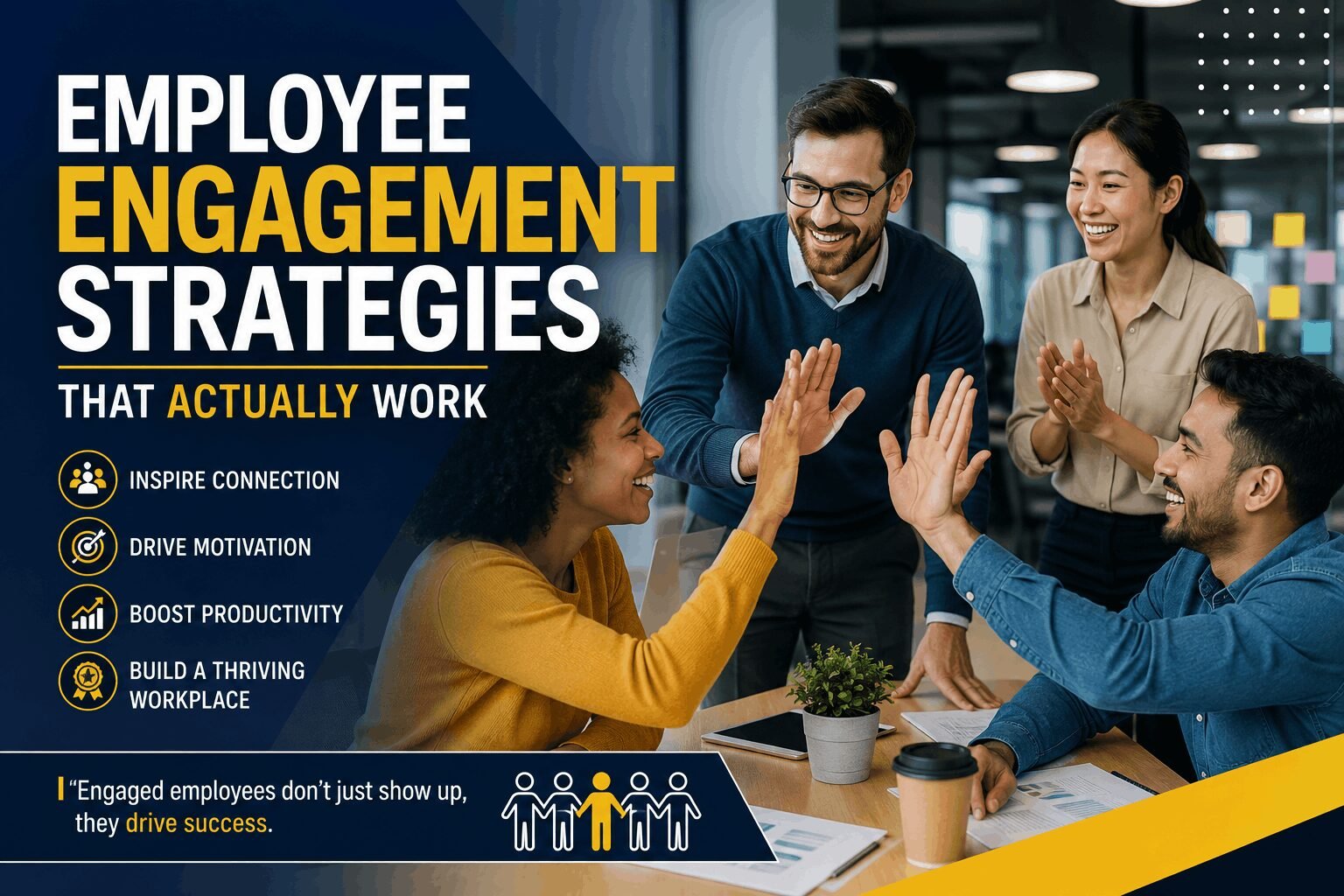
Employees don’t stay motivated because of free coffee, office games, or occasional team outings. They stay engaged when they feel heard, valued, and connected to the company’s vision. In today’s fast-changing workplace, organizations that invest in Employee Engagement Strategies create stronger teams, improve productivity, and retain top talent.
Whether you’re leading a startup, managing a growing business, or overseeing a large organization, employee engagement should be one of your biggest priorities. Engaged employees are more likely to contribute innovative ideas, collaborate effectively, and become advocates for your company.
In this guide, we’ll explore practical strategies that genuinely improve workplace engagement and explain why communication plays a critical role in building high-performing teams.
What Is Employee Engagement?
Employee engagement is the emotional commitment employees have toward their organization, its goals, and its people. An engaged employee doesn’t just complete assigned tasks they actively contribute to the company’s success.
High engagement creates a workplace where employees:
- Feel motivated to perform their best.
- Take ownership of their responsibilities.
- Collaborate with colleagues.
- Stay loyal to the organization.
- Continue learning and growing.
Simply put, engagement is about creating a workplace where people genuinely want to contribute.
Read More: Key Factors to Consider Before Hiring a Motivational Speaker in India.
Why Employee Engagement Matters
Businesses often focus on hiring great talent but overlook the importance of keeping employees engaged.
Organizations that prioritize workplace engagement strategies often experience:
- Higher employee productivity
- Better collaboration across teams
- Lower employee turnover
- Improved customer satisfaction
- Stronger workplace culture
- Increased innovation
- Better business performance
When employees feel connected to their work, everyone benefits from the leadership team to customers.
7 Employee Engagement Strategies That Actually Work
1. Build a Culture of Open Communication
One of the most effective ways to improve employee engagement is through honest and transparent communication.
Employees want to know:
- What the company is working toward.
- Why certain decisions are made.
- How their contributions make a difference.
Leaders who communicate regularly create trust and reduce uncertainty.
Simple actions include:
- Weekly team updates
- Open Q&A sessions
- One-on-one conversations
- Regular feedback meetings
Great communication isn’t just about speaking it’s about listening.
2. Recognize and Appreciate Good Work
Recognition is one of the simplest yet most powerful employee motivation strategies.
Employees who feel appreciated are more likely to remain committed and motivated.
Recognition doesn’t always require expensive rewards.
Sometimes a sincere “thank you,” public appreciation during a meeting, or celebrating achievements can have a lasting impact.
Create opportunities to recognize:
- Outstanding performance
- Teamwork
- Innovation
- Consistency
- Positive attitude
Small moments of appreciation help build a stronger workplace culture.
3. Encourage Learning and Growth
People want careers, not just jobs.
Providing opportunities for professional development shows employees that the organization values their future.
Offer:
- Leadership workshops
- Skill development programs
- Industry seminars
- Mentorship opportunities
- Communication training
Employees who continue learning remain motivated and contribute more effectively.
4. Create Meaningful Team Connections
Strong teams aren’t built through occasional celebrations they’re built through daily collaboration.
Encourage:
- Cross-functional projects
- Team brainstorming sessions
- Knowledge sharing
- Collaborative problem-solving
When people trust one another, team collaboration becomes more natural, improving overall performance.
5. Give Employees a Voice
Employees are more engaged when they know their opinions matter.
Ask for feedback regularly through:
- Employee surveys
- Suggestion programs
- Team discussions
- Individual meetings
Most importantly, act on the feedback whenever possible.
Listening without taking action eventually discourages participation.
6. Support Employee Well-being
A productive employee is not simply someone who works longer hours.
Organizations should focus on creating an environment where employees can perform at their best without compromising their well-being.
Consider initiatives such as:
- Flexible work arrangements
- Mental wellness support
- Work-life balance
- Healthy workplace policies
Employees who feel supported are more likely to remain committed to the organization.
7. Lead with Purpose and Authenticity
Employees don’t just follow job descriptions they follow leaders they trust.
Authentic leadership creates emotional connections that inspire people to perform beyond expectations.
Great leaders:
- Communicate honestly.
- Lead by example.
- Admit mistakes.
- Celebrate team success.
- Inspire through vision.
Purpose-driven leadership builds long-term employee engagement at work.
The Role of Communication in Employee Engagement
Many organizations invest in technology, benefits, and workplace perks, yet still struggle with engagement.
The missing element is often communication.
When communication is unclear, employees become disconnected.
When communication is meaningful, employees feel:
- Included
- Valued
- Trusted
- Motivated
Strong leadership communication encourages collaboration, strengthens workplace relationships, and creates a culture where people are comfortable sharing ideas.
Communication isn’t simply a management skill it’s a leadership advantage.
Why Storytelling Makes Leaders More Engaging
Facts inform people, but stories inspire them.
Great leaders use storytelling to explain vision, celebrate achievements, and connect emotionally with their teams.
Stories help employees understand:
- The company’s purpose
- Customer impact
- Team success
- Organizational values
Instead of simply delivering instructions, storytelling creates meaning behind the work people do every day.
This emotional connection increases motivation and strengthens employee engagement strategies across the organization.
How The Power Speak Helps Leaders Build Engaged Teams
Employee engagement begins with conversations that inspire trust, collaboration, and purpose.
At The Power Speak, we believe that meaningful communication is one of the most powerful tools for building successful organizations.
Founded by Abhishek Mudgal, an award-winning digital marketing visionary, The Power Speak is a storytelling-driven platform that brings together business leaders, entrepreneurs, changemakers, and creative professionals to share ideas that inspire action.
Through impactful storytelling, leadership insights, and transformative conversations, The Power Speak helps professionals strengthen communication skills, influence teams, and create workplaces where people feel motivated to contribute their best.
Because when leaders communicate with clarity and authenticity, engagement becomes a natural outcome not a corporate initiative.
Final Thoughts
Successful organizations understand that employee engagement isn’t built overnight. It grows through trust, recognition, continuous learning, open communication, and leadership that genuinely cares about people.
The most effective Employee Engagement Strategies focus on creating meaningful experiences rather than simply implementing policies. Employees who feel connected to their work are more productive, innovative, and committed to organizational success.
If you want to build a workplace where people are inspired to grow, collaborate, and perform at their best, start by investing in communication. After all, every engaged team begins with a leader who knows how to connect, inspire, and bring people together.
That’s exactly what The Power Speak stands for empowering leaders through the art of storytelling and communication to create lasting impact in the workplace and beyond.
FAQs
1. What are employee engagement strategies?
Employee engagement strategies are practices that help employees feel motivated, valued, and connected to their work, leading to higher productivity and job satisfaction.
2. Why is employee engagement important?
Engaged employees are more productive, collaborate better, stay longer with the company, and contribute to a positive workplace culture.
3. How can leaders improve employee engagement?
Leaders can improve engagement by communicating openly, recognizing achievements, encouraging growth, listening to feedback, and building trust within their teams.
4. What role does communication play in employee engagement?
Clear and meaningful communication helps employees understand company goals, strengthens relationships, and creates a workplace where people feel heard and valued.
5. How does The Power Speak help organizations build engaged teams?
The Power Speak empowers leaders through storytelling, communication, and leadership insights, helping them inspire teams, strengthen workplace culture, and create meaningful employee engagement.